
Article
7 Brain Game Strategies That Actually Make You a Better Problem Solver
Discover seven evidence-backed strategies to improve your puzzle-solving skills, from pattern recognition to deliberate practice. Learn how brain games like NYT Connections can enhance your cognitive abilities.
7 Brain Game Strategies That Actually Make You a Better Problem Solver
In a world overflowing with passive entertainment, brain games and puzzle apps stand out as one of the few screen-based activities that genuinely exercise your mind. Whether you are tackling a crossword on your morning commute or working through a logic grid before bed, the act of solving puzzles strengthens cognitive skills you use every day: pattern recognition, lateral thinking, working memory, and strategic planning.
But not all puzzle-solving approaches are created equal. Below are seven evidence-backed strategies that will help you get more out of every brain game you play — from word puzzles and trivia apps to the increasingly popular category-matching challenges that have taken the internet by storm.
1. Start With What You Know (Then Eliminate)
The most reliable technique in any puzzle is the process of elimination. When you face a grid of seemingly unrelated items — words, numbers, images — begin by identifying the groups or connections you are most confident about. Lock those in, and the remaining options become dramatically easier to parse.
This approach is central to games like the NYT Connections puzzle, where players sort 16 words into four hidden categories. If you ever get stuck on one of these daily challenges, resources like Connections Answers can help you review past solutions, study category patterns, and refine your grouping instincts for future rounds.
2. Train Pattern Recognition With Variety
Your brain gets better at spotting patterns when it encounters them across different contexts. Rotating between puzzle types — sudoku one day, a word-association game the next, a spatial reasoning app the day after — forces your mind to generalize pattern-recognition skills rather than memorize narrow tricks.
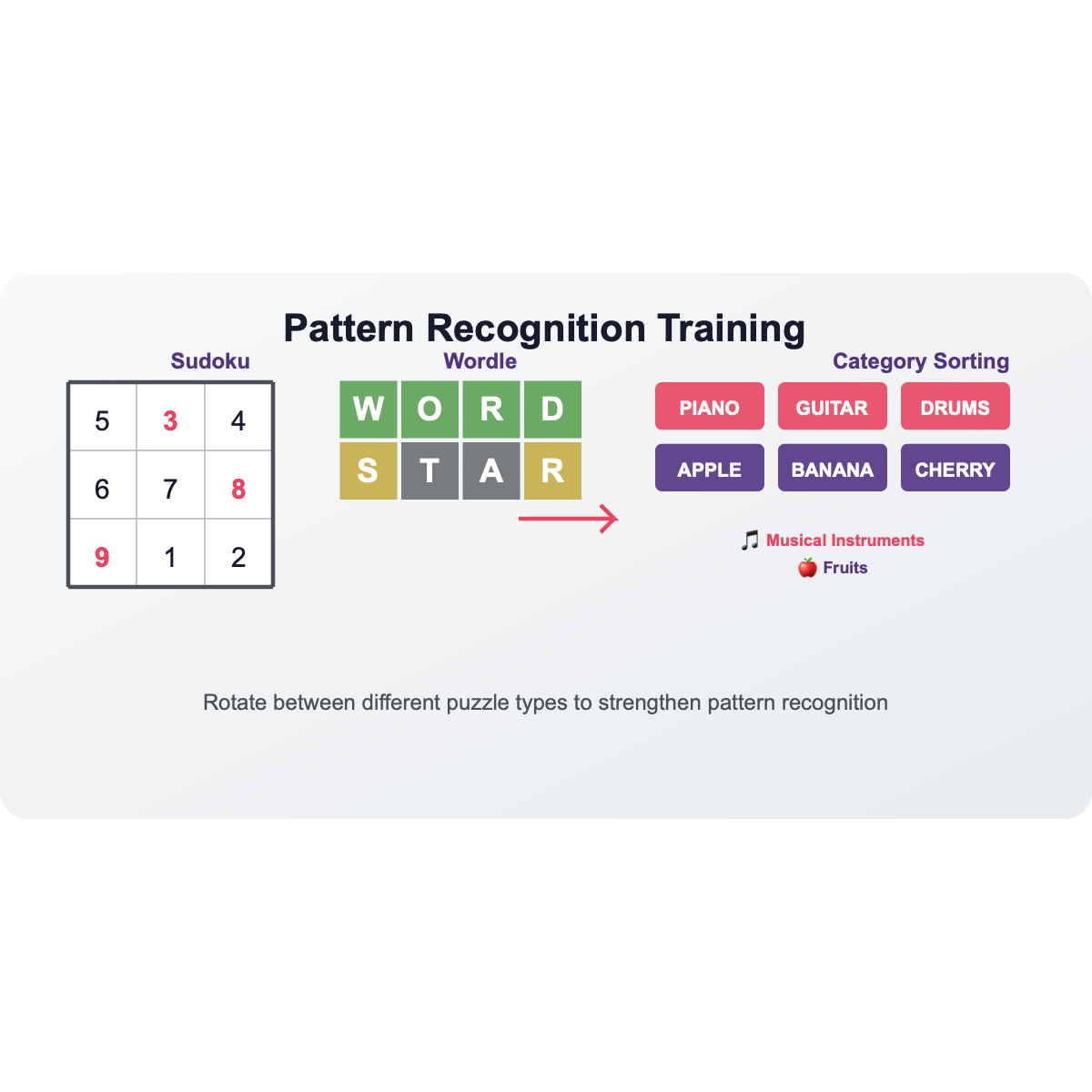
Popular apps worth rotating through include:
- Sudoku for number-placement logic
- Wordle and its variants for letter-frequency intuition
- Category-sorting puzzles for semantic grouping
- Nonograms (Picross) for deductive visual reasoning
Mixing genres prevents the plateau effect that occurs when you play only one type of game for weeks on end.
3. Set a Time Constraint — But Not Too Tight
Research in cognitive science suggests that moderate time pressure improves focus without triggering anxiety. If a puzzle app offers a timed mode, use it — but give yourself about 20% more time than the "expert" threshold. This sweet spot keeps you engaged while still allowing space for creative lateral thinking.
For untimed puzzles, set your own soft deadline using a phone timer. The gentle pressure discourages the rabbit-hole effect where you stare at one clue for ten minutes instead of moving on and returning later.
4. Review Your Mistakes Deliberately
Finishing a puzzle is only half the learning loop. The other half is reviewing where you went wrong. Many modern puzzle apps now offer post-game breakdowns, but if yours does not, keep a simple note on your phone:
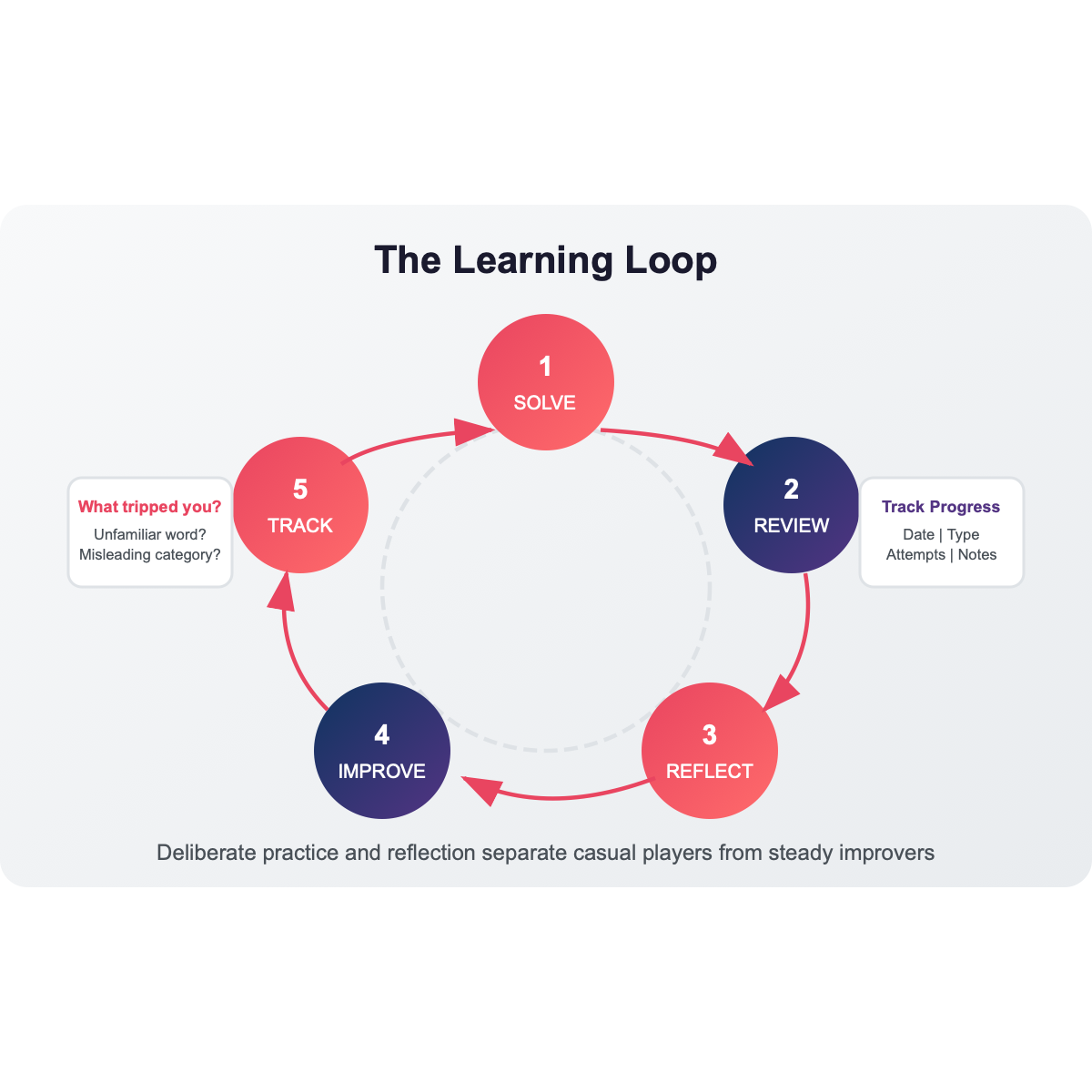
- What tripped you up? (An unfamiliar word? A misleading category?)
- What strategy did you use? (Elimination? Gut instinct?)
- What would you try differently?
This reflective practice is what separates casual players from people who steadily improve. For category-based word puzzles, checking a reliable archive of Connections Answers after each session is a practical way to study the types of thematic links the puzzle designers favor — pop culture references, linguistic wordplay, double meanings, and more.
5. Use the "Two-Minute Scan" Before Diving In
Before committing to any answer, spend two minutes simply scanning the entire puzzle. Read every clue, look at every tile, and resist the urge to solve anything during this window. Your subconscious is remarkably good at detecting patterns when you feed it all the data first.
This technique is borrowed from standardized test preparation, where top scorers consistently report previewing all questions before answering any. The same principle applies to grid puzzles, crossword banks, and category-matching challenges alike.
6. Play Socially to Unlock New Perspectives
Solo puzzle-solving builds personal discipline, but collaborative play reveals blind spots. When you discuss a tricky brain teaser with a friend or an online community, you discover reasoning paths you would never have considered on your own.
Many puzzle communities thrive on platforms like Reddit and Discord, sharing daily hints, debating category boundaries, and celebrating streak milestones. If you enjoy the social side of word puzzles, consider joining a group that discusses daily challenges — it turns a five-minute game into a rich conversation about language, logic, and culture.
7. Track Your Progress Over Time
Gamification works. If your puzzle app offers streak tracking or performance stats, pay attention to them. If it does not, create a simple spreadsheet logging:
| Date | Puzzle Type | Attempts | Result | Notes |
|---|---|---|---|---|
| Apr 7 | Category Match | 2 errors | Solved | Confused "musical terms" with "dance styles" |
| Apr 6 | Crossword | — | Completed | Struggled with 17-Across clue |
Over weeks and months, these logs reveal which puzzle categories challenge you most, which strategies produce the best results, and how your speed and accuracy trend upward.
The Bigger Picture: Why Puzzles Matter
Beyond entertainment, regular engagement with brain games has been linked to improved verbal fluency, stronger working memory, and greater mental flexibility in everyday decision-making. The key is consistency — a ten-minute daily session outperforms a two-hour weekend binge.
Whether you prefer classic crosswords, modern word games, or the category-sorting puzzles that have recently surged in popularity, the strategies above will help you extract maximum cognitive benefit from every session. And when you need a hand with those particularly tricky grouping puzzles, a quick visit to Connections Answers can turn a moment of frustration into a genuine learning opportunity.
Brain games are most effective when played consistently and reflectively. Pick one strategy from this list, apply it for a week, and watch how your puzzle-solving instincts sharpen.